BALDWIN LOCOMOVTIVES |
7 |
|
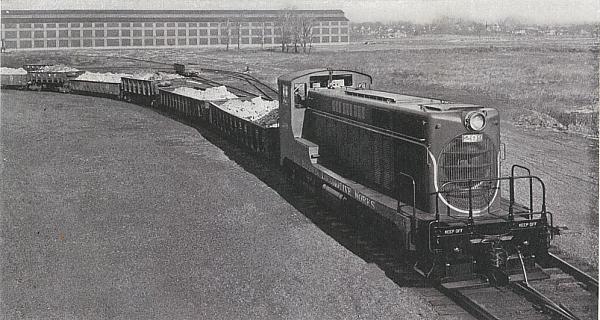
tive power. Baldwin has contributed the ex- perience of 108 years of association of the most intimate character with the motive power men o'n the railroads. The result has been the development and building of standardized groups of 1,000-hp. and 660-hp. Diesel-elec- trics for transfer and switching service. They embody the refinements of this type of power to date as well as many innovations. Diesel-electrics in switching and transfer work have proven economies which show op- erating expenses cut 50 per cent or more. Those items affected in such service are re- pairs, fuel, water, and engine house expense. Naturally high operating savings accrue where three-trick, seven-day service is rendered. When starting a load or "kicking" out cars the Diesel engine conies to maximum speed within a few seconds and there is made avail- able full tractive power through the electrical transmission system. Quick acceleration re- sults. Efficiencies are favorable whether ac- celerating or "high-balling" on a transfer job. Standby losses are small. Dependent upon the service in which a Diesel-electric locomotive is placed, the amount of fuel consumed may vary from 4 1/2 gallons per hour in light switching with 660- hp. to 12 gallons per hour with 1,000-hp. in a combination switching and transfer job. These locomotives carry adequate fuel to operate 2 |
to 3 days without refueling. They can be read- ily serviced adjacent to their operations through tank cars or through tank trucks. Eight hours are taken by monthly I. C. C. in- spection. Daily inspections are carried on dur- ing the lunch period and during operations in service. Daily care of small adjustments and accu- rate observations of details spells success in operation and keeps availability well above 90 per cent. Systematic inspection prevents ma- jor troubles. The accumulated data from sys- tematic inspections have been made available to the manufacturers through the motive power departments. Such cooperation is con- structive and enables the manufacturer to pro- gressively simplify detail and make available Diesel-electric power of utmost reliability. Perhaps no group has a better appreciation of Diesel-electric power than the Transpor- tation men who are continuously occupied with collecting, transporting and distributing freight. Much can be learned from them as to the existing characteristics, advantages, short- comings and the desirable features of road, switching and transfer power. This group knows best where the use of new power can be extended and added savings made. The mental picture which the men in this depart- |
 |