6 |
BALDWIN LOCOMOVTIVES |
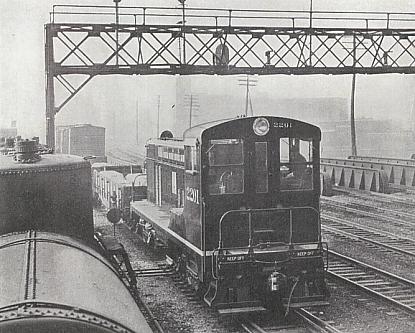
Baldwin 1000-Hp. Diesel-Electric Switcher in the Santa Fe Yards at Chicago. |
fundamental study of maintenance methods and the demand for continuity of service with full trac- tion power. motor trucks was not un- derstood early in the last decade. Detailed studies by the traffic, motive power and transportation groups of the railroads developed the type of service which trucks could render eco- nomically and coordinated it with rail transport serv- ice. The result was store- door pickups and deliver- ies combined with "Speed- ball" rail transport. This balanced service was em- braced immediately by the |
|
shop maintenance is scheduled. Fixed charges dwindle when high daily mileage piles up. Light-weight trains which average 60 per cent of the weight of a train of conventional cars for a like seating capacity, permit faster sched- ules or added seat miles on normal schedules. Over 650 Diesel-electric locomotives are now in service on the railroads. Individual units have as much as 2,000 hp. installed. The horsepower per unit is boosted frequently as experience and design make available more compact and serviceable Diesel engines. Col- lecting and distributing service normally re- quires 660-hp. locomotives. Light transfer and classification service normally uses 1,000-hp. locomotives. Road service with modern light- weight coach trains requires from 2,000 to 4,000-hp: on the front end. Road service with all-Pullman trains employs multiple units to- taling as much as 6,000-hp. per train. Maintenance costs on Diesel-electric road power is accounted on a par with steam. Many correlated advantages and savings, such as ef- fects on the road bed, have not settled to a point where they can be properly evaluated. The economics of the application and use of Diesel-electric road locomotives is sensitive to progress in design. An innovation in design by Baldwin is taking shape as a result of a |
railroad's customers. All-year-round depend- able service is now available without regard to icy roads or heavy snow. Coordinated transportation keeps the re- ceiving doors of freight houses open for longer periods of time with the constant assurance of early deliveries at destination. When the Diesel-electric switcher takes hold, all engine traction horsepower is available at the wheels for accelerating l.c.l. and full carload move- ments. The "snap" of this form of power cuts the time of handling the average car from 25 to 30 per cent during the collection, transfer and classification periods. Such performance cuts deeply into terminal and yard costs which account for more than 50 per cent of the cost of moving freight. motive Works is alert to the growing demand for Diesel power. The Traffic, Motive Power, and Transportation Departments of the rail- roads have thoroughly analyzed the require- ments for Diesel-electric power and have of- fered constructive suggestions. The open dis- cussions on performance requisites and safety of operation fostered by the various organiza- tions within the A. A. R. have contributed much to the knowledge of Diesel-electric mo- |